Territorial Precision: The Ordnance Survey Approach to Bespoke Skin Analysis
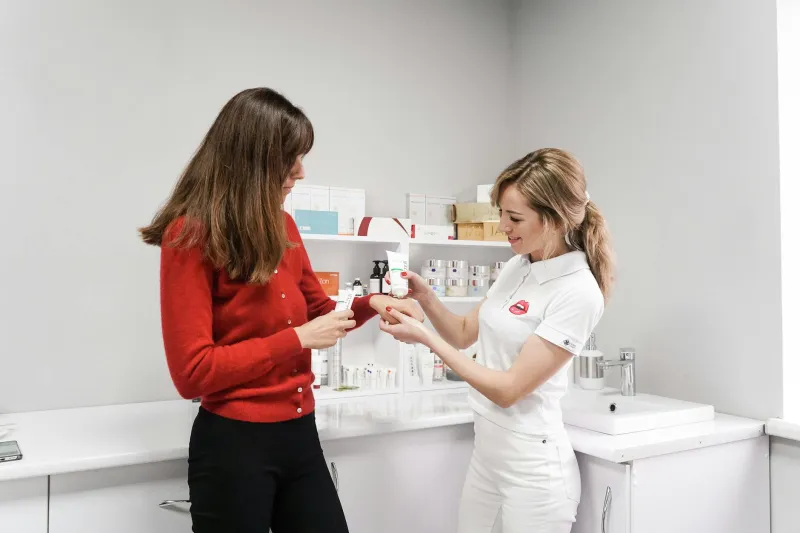
The Cartographer's Eye: Precision in Skin Analysis
The same meticulous attention to detail that enabled Britain's Ordnance Survey to map every contour, elevation, and boundary of our landscape now finds expression in the most sophisticated skincare clinics across London and Edinburgh. This cartographic approach to skin analysis represents a fundamental departure from the crude generalizations of traditional "skin typing," offering instead a nuanced, territory-by-territory understanding that enables truly bespoke treatment protocols.
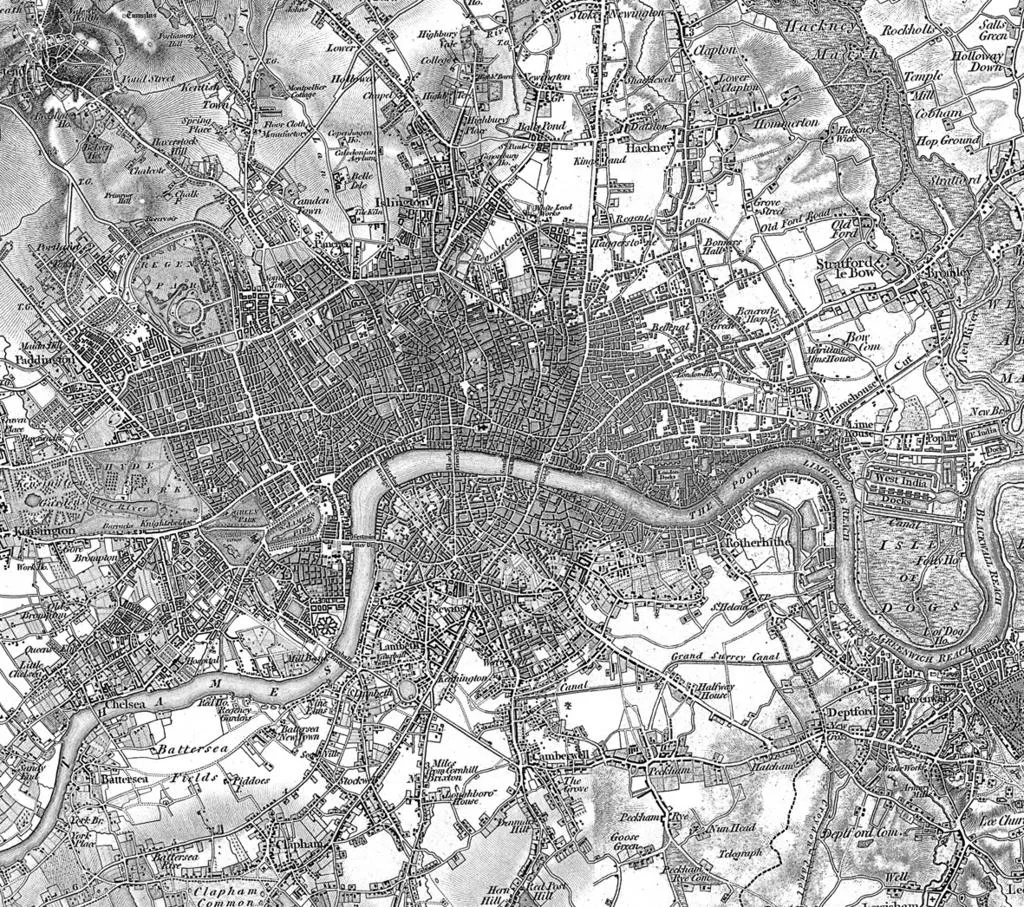 Photo: Ordnance Survey, via cdn.wallpapersafari.com
This evolution reflects a broader shift towards precision in beauty—one that mirrors the scientific rigour that made British mapping the global gold standard. Where previous generations of aestheticians might categorise skin as simply "oily," "dry," or "combination," today's most advanced practitioners employ detailed mapping techniques that would be familiar to any surveyor from the Royal Geographical Society.
 Photo: Royal Geographical Society, via www.venuesearchlondon.com
The Heritage of British Precision
Britain's cartographic tradition began in earnest following the Jacobite Rising of 1745, when the government recognised the strategic importance of detailed territorial knowledge. The resulting Ordnance Survey, established in 1791, developed methodologies for capturing landscape complexity that remain unmatched in their precision and systematic approach.
This same systematic methodology now informs the work of leading skin analysts who recognise that facial skin exhibits the same territorial variations that characterise any complex landscape. Dr. Emma Craythorne, consultant dermatologist at the Cadogan Clinic, draws explicit parallels between her diagnostic approach and traditional surveying techniques.
"The Ordnance Survey understood that accurate mapping requires multiple data points, systematic observation, and the recognition that conditions can vary dramatically within small areas," Dr. Craythorne explains. "The same principles apply to skin analysis. A client might have dehydrated cheeks, congested T-zone areas, and sensitive eye zones—each requiring entirely different treatment approaches."
Technological Cartography: Modern Mapping Tools
At the forefront of this movement, invitation-only clinics in Mayfair and Edinburgh's New Town employ sophisticated imaging technology that would impress any professional cartographer. The VISIA Complexion Analysis system, used by select practitioners, creates detailed topographical maps of facial skin that reveal invisible variations in pigmentation, pore distribution, and barrier function.
Sarah Chapman, whose Skinesis clinic has become synonymous with precision skincare, employs what she terms "micro-territorial analysis." Her consultation process involves detailed photography under multiple light spectrums, revealing the skin's hidden geography much like satellite imagery reveals landscape features invisible to casual observation.
"Traditional skin typing is like describing Britain as simply 'hilly,'" Chapman observes. "Our approach creates detailed contour maps that show exactly where intervention is needed and what type of treatment each zone requires."
The resulting skin maps identify distinct territories: perhaps a "metropolitan zone" around the nose requiring deep pore cleansing, "coastal regions" along the jawline prone to hormonal fluctuations, and "highland areas" on the cheeks requiring intensive hydration and barrier repair.
The Survey Method: Systematic Assessment
The most sophisticated practitioners have developed assessment protocols that mirror traditional surveying methodology. Like Ordnance Survey teams who systematically traverse terrain to create accurate maps, these skin cartographers employ structured observation techniques that ensure no detail escapes attention.
Facialist Andy Millward, whose Mayfair practice attracts discerning clients seeking precision treatment, has developed what he calls the "Triangulation Method"—a reference to the surveying technique used to establish precise positions. His approach involves examining each facial zone from multiple angles and under different lighting conditions to build a comprehensive understanding of skin behaviour.
"A surveyor doesn't simply glance at a landscape and make assumptions," Millward explains. "They take measurements, note variations, and create detailed records. We apply the same rigour to skin analysis, documenting how different areas respond to touch, light, and environmental changes."
This systematic approach often reveals surprising discoveries. Areas that appear problematic under standard lighting might prove healthy under alternative illumination, while seemingly clear zones may harbour underlying congestion or barrier dysfunction invisible to casual observation.
Zone-Specific Treatment Protocols
The practical application of skin mapping extends far beyond diagnosis to inform highly specific treatment protocols. Rather than applying uniform treatments across the entire face, mapped skincare employs zone-specific approaches that address each territory's particular requirements.
Dr. Barbara Sturm's London clinic employs what she terms "territorial skincare," where different facial zones receive entirely different treatment protocols. The periorbital region might receive gentle peptide treatments to address fine lines, whilst the central facial zone undergoes more aggressive exfoliation to address texture concerns.
This approach requires considerable expertise and often custom formulation. Many practitioners now work with compounding pharmacies to create bespoke treatment serums designed for specific facial territories. A single client might receive three or four different formulations, each precisely calibrated for its intended zone.
The Seasonal Survey: Adaptive Mapping
Just as landscape conditions change with seasons and weather patterns, skin territories exhibit temporal variations that sophisticated mapping must accommodate. The most advanced practitioners conduct regular "resurveys" to track how facial zones evolve with age, hormonal changes, and environmental factors.
This dynamic approach reflects the Ordnance Survey's own evolution from static mapping to continuously updated digital cartography. Modern skin mapping employs similar principles, recognising that effective treatment requires ongoing assessment and adaptation.
Facialist Nichola Joss, whose celebrity clientele includes those seeking the ultimate in precision skincare, advocates for monthly mapping sessions that track territorial changes over time. "Skin is a living landscape," she notes. "Areas that required intensive treatment in winter might need entirely different approaches as seasons change."
At-Home Cartography: Self-Mapping Techniques
For discerning individuals seeking to apply cartographic principles to their personal skincare routines, several techniques enable basic territorial analysis without professional equipment. The key lies in systematic observation and careful documentation—skills that any student of British geography would recognise.
Begin with what professionals term "lighting cartography"—examining skin under different illumination conditions throughout the day. Natural morning light reveals texture variations, whilst evening artificial light highlights pigmentation irregularities. Bathroom lighting often shows different concerns entirely.
Document observations systematically, noting how different zones respond to products, weather changes, and hormonal fluctuations. This creates a personal skin map that enables increasingly precise product selection and application.
The "touch survey" involves systematic palpation of facial zones to identify areas of congestion, dehydration, or sensitivity invisible to visual inspection alone. Like a surveyor reading terrain through physical exploration, this technique reveals the skin's hidden topography.
The Future of Precision Skincare
As this cartographic approach gains acceptance among Britain's most sophisticated skincare practitioners, its influence extends beyond individual treatments to inform product development and retail approaches. Several British skincare brands now develop zone-specific products designed for mapped application rather than uniform facial coverage.
The Royal Society of Chemistry has recognised skin mapping as a legitimate scientific discipline, whilst the British Association of Dermatologists increasingly emphasises territorial analysis in professional training programmes.
For the discerning skincare enthusiast, this evolution represents an opportunity to engage with facial care as a precision science rather than a generalised routine. Like the Ordnance Survey maps that reveal Britain's hidden complexity, sophisticated skin mapping unveils the unique geography of individual beauty—enabling treatments as precise and effective as the mapping tradition that inspired them.
In an era where personalisation has become a marketing buzzword often divorced from meaningful customisation, cartographic skincare offers genuine bespoke treatment based on scientific observation and systematic analysis. The result is skincare that functions with the precision of British engineering and the beauty of our finest mapped landscapes.