The Sanctuary Shift: How Mindful Mornings Are Transforming Britain's Beauty Landscape
The Dawn of Deliberate Beauty
In the pre-dawn quiet of a Hampstead townhouse, Sarah Mitchell begins her morning not with the jarring alarm of productivity culture, but with five minutes of breathwork before reaching for her carefully curated selection of botanical serums. This scene, increasingly common across Britain's more discerning households, represents a profound shift in how we approach the morning beauty ritual.
The traditional British morning—characterised by efficiency, pragmatism, and a certain stoic rush towards the day's obligations—is undergoing a quiet revolution. Where once we might have splashed cold water on our faces and applied a cursory layer of moisturiser, today's wellness-conscious consumer treats their bathroom as a sanctuary, their skincare routine as meditation, and their product selection as an extension of their values.
The Philosophy of Fewer, Better Things
Dr. Emma Thornton, a wellness practitioner based in Bath, observes this transformation daily amongst her clientele. "We're witnessing a fundamental rejection of the more-is-more mentality that dominated beauty for decades," she explains. "My clients are asking not what they should add to their routines, but what they can mindfully remove."
This philosophy manifests in bathroom cabinets across the country, where towering collections of products have given way to carefully chosen essentials. The modern British beauty enthusiast might own three serums instead of thirty, but each one serves a specific purpose within a broader wellness framework. Adaptogenic ingredients—ashwagandha, reishi, ginseng—are no longer confined to supplement bottles but have found their way into face oils and morning cleansers.
Lucy Pemberton, buying director for several independent beauty retailers across the Cotswolds, confirms this trend from a commercial perspective. "Our customers are investing in what I call 'ceremony pieces'—products that transform a mundane task into a meaningful moment. They're buying rose quartz gua sha tools not just for their lymphatic benefits, but for the ritual itself."
The Ritualisation of the Everyday
This shift towards ritual represents more than mere indulgence; it reflects a broader cultural recalibration of our relationship with time and self-care. The five-minute face mask has evolved into a twenty-minute meditation. The quick spritz of toner has become a moment of intention-setting with a copper misting vessel and Bulgarian rose water.
British brands have responded with sophisticated offerings that bridge traditional skincare and modern wellness philosophy. Neal's Yard Remedies, long a pioneer in this space, reports unprecedented demand for their Wild Rose Beauty Balm—not merely for its organic credentials, but for the mindful application ritual it encourages. Similarly, newer brands like Haeckels and Grown Alchemist have built entire identities around the concept of transformative, rather than merely corrective, beauty.
The Science of Slowing Down
Behind this cultural shift lies compelling research into the physiological benefits of mindful morning routines. Dr. James Whitfield, a dermatologist practising in Edinburgh, notes that "stress reduction through considered morning rituals can have measurable impacts on skin health. When we approach our skincare with intention rather than urgency, we're more likely to notice changes in our skin's needs and respond appropriately."
This scientific backing has legitimised what might once have been dismissed as self-indulgence. The jade roller is no longer just an Instagram prop but a tool for lymphatic drainage. The ten-step Korean skincare routine has been distilled into a five-step British interpretation that prioritises quality over quantity, mindfulness over speed.
Curating the Contemporary Shelf
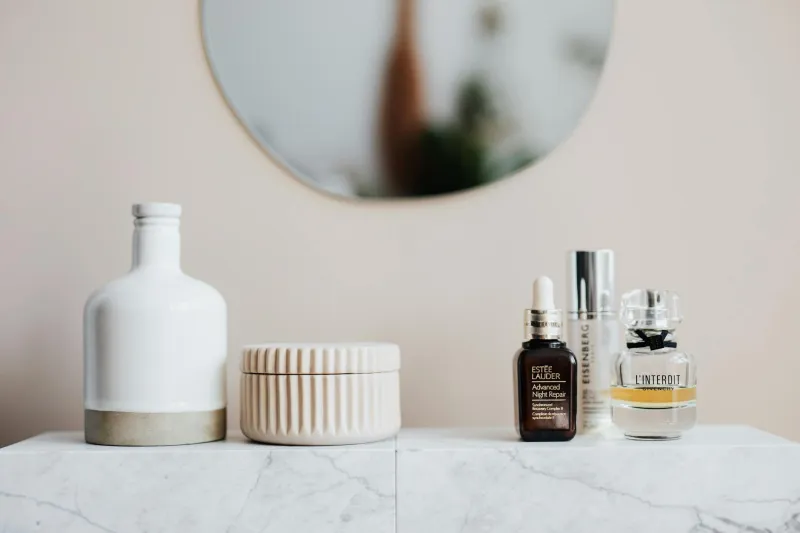
The modern British bathroom shelf tells a story of values as much as vanity. Packaging has become deliberately minimal—think apothecary bottles in amber glass, labels in serif fonts, ingredients lists that read like poetry rather than chemistry. Brands like Aesop and Le Labo have capitalised on this aesthetic, creating products that serve as both functional beauty tools and objects of contemplation.
Independent retailers report that their most successful products are those that encourage pause rather than productivity. A cleanser that requires two minutes of massage rather than thirty seconds of scrubbing. A serum that must be warmed between the palms before application. These seemingly inefficient design choices have become selling points for consumers seeking to inject meaning into their mornings.
The Broader Implications
This transformation extends beyond individual consumer choices to represent a fundamental shift in British beauty culture. Where previous generations might have viewed extensive morning routines as frivolous, today's wellness-conscious consumer sees them as essential maintenance for both physical and mental health.
The implications ripple through the industry. Beauty counters now stock meditation apps alongside moisturisers. Spas offer "morning ritual consultations" alongside traditional facials. Even traditional British pharmacies—Boots, Superdrug—have expanded their wellness offerings to meet this growing demand for holistic beauty solutions.
The Future of Mindful Beauty
As this trend continues to evolve, we can expect to see further integration between traditional beauty and wellness philosophy. The morning routine is becoming less about achieving a particular aesthetic and more about establishing a foundation for the day ahead. In a culture increasingly conscious of mental health and work-life balance, the bathroom has emerged as an unlikely sanctuary—a space where efficiency yields to intention, and beauty serves not just vanity but wellbeing.
For Britain's most discerning beauty enthusiasts, the morning ritual has become an act of resistance against the tyranny of urgency, a daily commitment to treating oneself with the same care and attention we might lavish on a cherished guest. In this small revolution lies perhaps the most significant shift in British beauty culture for a generation.