The Private Edit: Why Britain's Elite Are Abandoning Beauty Counters for Invitation-Only Consultants
The Death of the Democratic Counter
The traditional beauty counter model—with its bright lights, queuing systems, and one-size-fits-all consultations—was designed for an era when access to expertise was scarce and product choice limited. Today's discerning consumer faces the opposite challenge: overwhelming choice and democratised access to information that often contradicts the sales-driven advice offered in department stores.
"I realised I was spending more time educating the consultants than being educated by them," reflects Charlotte Pemberton, a Mayfair-based art consultant who made the transition to private beauty advice three years ago. "The counter model assumes ignorance on the part of the customer, but many of us now know more about ingredients and formulations than the people trying to sell to us."
This sentiment echoes across London's professional networks, where women with sophisticated tastes and substantial purchasing power are increasingly seeking alternatives to the transactional nature of traditional beauty retail.
The Rise of Beauty Curation
Private beauty consultants operate more like personal stylists or art advisors than traditional retailers. They typically work by invitation only, maintain relationships with multiple brands rather than representing single companies, and focus on long-term routine architecture rather than immediate sales.
Sarah Chen, who transitioned from senior roles at both Selfridges and Liberty to establish her private consultancy three years ago, describes her clientele: "These are women who understand that good skincare is an investment, not an expense. They want strategic thinking about their beauty wardrobes, not impulse purchases."
Chen's clients include senior barristers, gallery directors, and private equity partners—women whose professional lives demand both discretion and excellence. Her consultation process involves detailed skin analysis, lifestyle assessment, and what she terms 'routine architecture'—the strategic construction of beauty regimens that adapt to seasonal changes, travel schedules, and life transitions.
The Economics of Expertise
Private beauty consultants typically charge consultation fees ranging from £150 to £500, with annual retainer arrangements for ongoing support. This model fundamentally alters the consultant's incentives, removing the pressure to sell specific products in favour of providing genuinely objective advice.
"When someone pays me for my time and expertise, I can recommend a £12 cleanser from Boots alongside a £200 serum from La Mer," explains Emma Rodriguez, whose Belgravia-based practice serves clients across London's financial and legal sectors. "The counter model makes that impossible—there's always an agenda."
This economic shift has created space for remarkably sophisticated beauty advice. Private consultants often maintain relationships with niche brands unavailable in department stores, can arrange private testing sessions, and provide access to limited editions and pre-launch products.
The Sanctuary Model
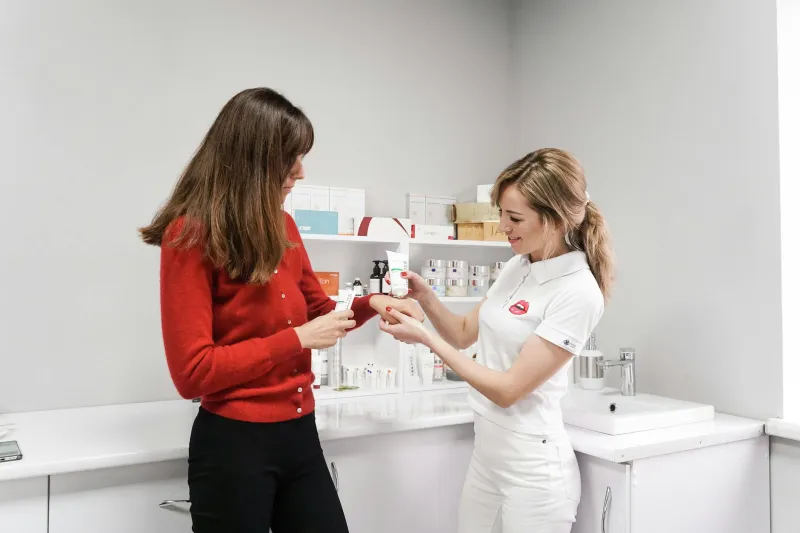
Many private beauty consultants operate from carefully curated spaces that bear no resemblance to traditional retail environments. These consultation rooms, often located in converted Georgian townhouses or discreet Marylebone mews, are designed to feel more like private libraries than shops.
"The environment matters enormously," notes Dr. Miranda Ashworth, whose Hampstead practice combines dermatological expertise with luxury product curation. "My clients need space to think, to ask questions without feeling rushed, to discuss their concerns without performing for other customers."
These spaces often feature natural lighting for accurate colour matching, comfortable seating for extended consultations, and carefully controlled product displays that emphasise quality over quantity. The aesthetic deliberately distances itself from the sensory overload of traditional beauty retail.
The Intelligence Advantage
Private consultants often possess industry intelligence unavailable to traditional counter staff. Many maintain direct relationships with brand founders, attend exclusive trade events, and participate in advanced training programmes that provide deeper product knowledge.
"I spend significant time each month visiting laboratories, attending ingredient seminars, and testing unreleased formulations," explains Victoria Hammond, whose clientele includes several members of Parliament and senior civil servants. "This intelligence allows me to guide my clients towards genuinely innovative products rather than marketing-driven launches."
This expertise extends to understanding the complex interactions between different products, the seasonal adjustment of routines, and the long-term effects of various ingredient combinations—knowledge that requires both scientific understanding and extensive practical experience.
The Cultural Shift
The rise of private beauty consultation reflects broader changes in how Britain's elite approaches luxury consumption. There's an increasing emphasis on provenance, craftsmanship, and personal service that mirrors trends in wine, art, and fashion.
"My clients want to understand the story behind their products," observes consultant Amanda Fraser, whose practice focuses on sustainable and artisanal beauty brands. "They're interested in the founder's philosophy, the ingredient sourcing, the manufacturing process. This level of detail is impossible to convey in a traditional retail environment."
This trend also reflects changing attitudes towards privacy and exclusivity. In an era of social media transparency, the private consultation offers a rare space for genuine discretion—a place where personal insecurities can be discussed without fear of public exposure.
The Future of Beauty Retail
The success of private beauty consultation suggests that traditional department store models may need fundamental restructuring to serve increasingly sophisticated consumers. Some forward-thinking retailers are already experimenting with appointment-only services, dedicated consultation suites, and fee-based advice models.
However, the personal relationships that define successful private consultation cannot be easily replicated at scale. The model's strength lies precisely in its exclusivity, its personalisation, and its freedom from commercial pressure.
As British women become increasingly educated about beauty ingredients, formulations, and industry practices, the demand for genuine expertise over sales theatre will only intensify. The private consultation model offers a glimpse of beauty retail's future—one where knowledge, discretion, and genuine service command premium prices and loyal followings.