Pigment and Palette: How British Masterworks Are Shaping Contemporary Colour Theory

The Gallery as Beauty Laboratory
Within the hallowed halls of the National Gallery and Tate Britain, a quiet dialogue unfolds between centuries-old canvases and contemporary cosmetics. Britain's artistic heritage, long celebrated for its distinctive approach to colour and light, has become an unexpected muse for the nation's most sophisticated beauty brands.
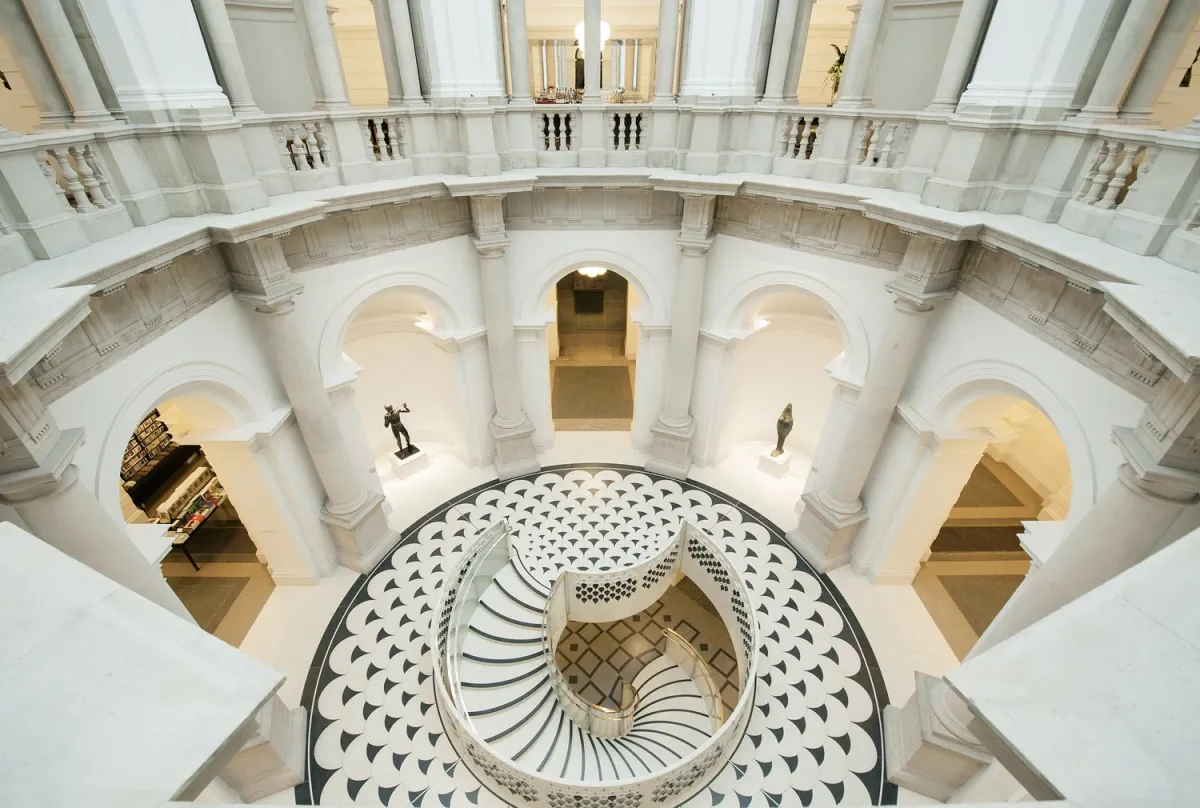 Photo: Tate Britain, via img.artrabbit.com
 Photo: National Gallery, via www.selldorf.com
This convergence represents more than mere aesthetic inspiration; it reflects a deeper understanding of how British light, British complexions, and British cultural sensibilities require a fundamentally different approach to colour cosmetics.
Turner's Luminous Legacy
J.M.W. Turner's revolutionary treatment of light and atmosphere has found unexpected resonance in contemporary makeup artistry. His ability to capture the mercurial quality of British light—that particular combination of grey skies and sudden brilliance that defines the nation's visual character—has inspired a new generation of complexion products.
 Photo: J.M.W. Turner, via kidskonnect.com
Charlotte Tilbury's recent "English Rose" collection draws directly from Turner's palette, incorporating the soft peaches and muted golds that characterise his most celebrated seascapes. The brand's creative director explains: "Turner understood that British light requires colours that can shift and adapt, just as our weather does."
This principle has influenced product development across multiple categories. Highlighters now incorporate the pearl-like luminosity found in Turner's cloud studies, while blush formulations mirror the delicate flush of his dawn scenes. The result is makeup that enhances rather than masks the natural variations in British complexions.
Pre-Raphaelite Intensity
The Pre-Raphaelite Brotherhood's rejection of academic convention and embrace of vivid, jewel-like colours has provided inspiration for a different category of products entirely. Brands such as Illamasqua and Barry M have developed collections that capture the movement's characteristic intensity while remaining wearable for contemporary lifestyles.
The key lies in understanding the Pre-Raphaelites' sophisticated use of contrast. Their paintings achieve drama not through overall intensity, but through the strategic placement of saturated colour against more neutral backgrounds. This principle translates beautifully to makeup application, where a single element—perhaps a bold lip colour or intensely pigmented eye shadow—can transform an otherwise understated look.
Estée Lauder's recent "Rossetti Red" lipstick collection exemplifies this approach, offering highly pigmented formulations that deliver maximum impact with minimal application. The colours themselves—deep crimsons, burgundies, and wine tones—mirror the rich palette favoured by Dante Gabriel Rossetti and his contemporaries.
Contemporary Watercolour Influence
Perhaps most intriguingly, contemporary British watercolourists have influenced the development of what might be termed "translucent beauty"—products that layer and blend with the same fluidity as watercolour paint.
Glosier's "British Girl" collection, developed in collaboration with London-based watercolourist Emma Dibben, features cream blushes and lip tints that build gradually, allowing for the kind of subtle colour variation that characterises the medium. The products are designed to be applied with fingers rather than brushes, encouraging the kind of intuitive blending that watercolour demands.
This approach reflects a broader trend towards more naturalistic makeup application, where perfection lies not in precise lines and uniform coverage, but in the kind of effortless gradation that skilled watercolourists achieve.
The Science of British Complexions
Underpinning these artistic influences is a growing understanding of the unique characteristics of British skin tones. Research conducted by several leading cosmetics companies has identified distinct patterns in how British complexions respond to different colour temperatures and undertones.
Dr Sarah Jenkins, a colour specialist at the London College of Fashion, explains: "British complexions tend to have more varied undertones than their continental counterparts, reflecting our complex genetic heritage. This requires a more nuanced approach to colour matching and product development."
This scientific understanding has informed the development of foundation ranges that accommodate the subtle variations found in British skin tones. Brands like Fenty Beauty and Rare Beauty have expanded their shade ranges specifically to address these nuances, offering options that complement rather than mask natural colouring.
Practical Application
Translating artistic inspiration into wearable makeup requires careful consideration of lifestyle and cultural context. The most successful products capture the essence of their artistic inspiration while remaining appropriate for British professional and social environments.
Key to this balance is understanding the concept of "edited drama"—the idea that sophistication lies not in obvious intensity, but in carefully chosen moments of colour and texture. A perfectly applied burgundy lip colour inspired by a Pre-Raphaelite painting can provide all the drama necessary for an evening look, while Turner-inspired highlighting can add luminosity to daytime makeup without appearing overdone.
The most successful applications of this artistic influence involve building looks around a single focal point, allowing that element to provide colour and interest while keeping the remainder of the makeup understated and polished.
The Future of Artistic Beauty
As British beauty brands continue to mine the nation's artistic heritage for inspiration, several trends emerge. There is a growing emphasis on products that encourage creativity and personal expression, rather than prescriptive looks that must be replicated exactly.
Additionally, the influence of British art has encouraged a more thoughtful approach to colour selection and application, where choices are made based on understanding of light, complexion, and cultural context rather than following international trends.
This artistic influence represents more than aesthetic inspiration; it reflects a maturing beauty market that values cultural authenticity and individual expression over homogenised global standards. By drawing from Britain's rich artistic tradition, contemporary beauty brands are creating products that celebrate rather than disguise the unique characteristics of British beauty.