Harmonic Convergence: The Musical Architecture of Modern British Fragrance Design
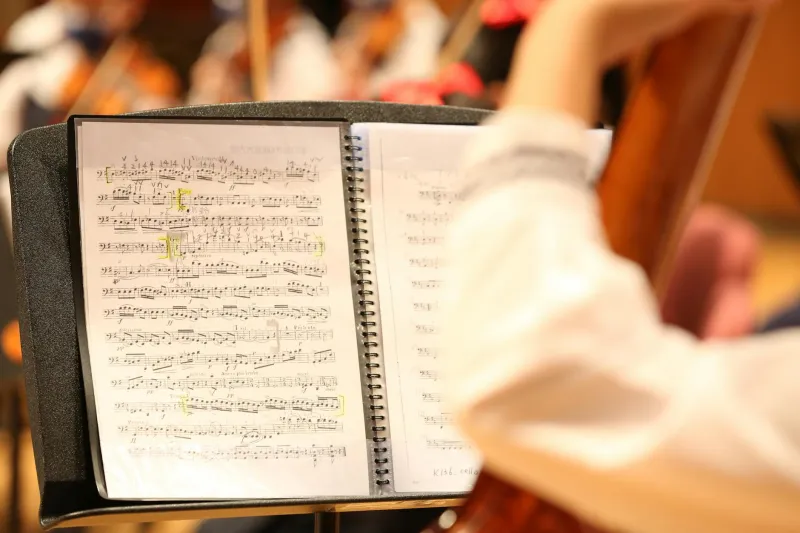
The Compositional Renaissance
In the hushed ateliers of Britain's most celebrated perfumers, a quiet revolution unfolds—one that draws its inspiration not from traditional fragrance pyramids, but from the complex harmonic structures that have defined British musical excellence for centuries. This convergence of olfactory and auditory artistry represents perhaps the most sophisticated evolution in contemporary fragrance creation, where the disciplines of composition and perfumery intersect with remarkable precision.
The parallel between musical and olfactory composition extends far beyond mere metaphor. Both arts demand an understanding of temporal progression, emotional crescendo, and the delicate balance between harmony and discord. Where traditional perfumery speaks in terms of top, heart, and base notes, this new generation of scent architects employs the language of movements, cadences, and thematic development.
The Structural Imperative
At Floris London, where royal warrants have graced the establishment since 1820, master perfumer Sarah McCartney speaks candidly about her collaboration with contemporary composer Max Richter. "A fragrance, like a symphony, must possess architectural integrity," she explains. "Each element must serve both its individual purpose and contribute to the greater harmonic whole."
This structural approach manifests in unexpected ways. McCartney's latest creation, commissioned for the Royal Opera House's 2024 season, unfolds in distinct movements: an opening allegro of bergamot and pink pepper that gives way to a contemplative adagio of English rose and frankincense, before culminating in a powerful finale of amber and sandalwood. The fragrance's progression mirrors the emotional journey of the evening's performance, creating what she terms "olfactory accompaniment."
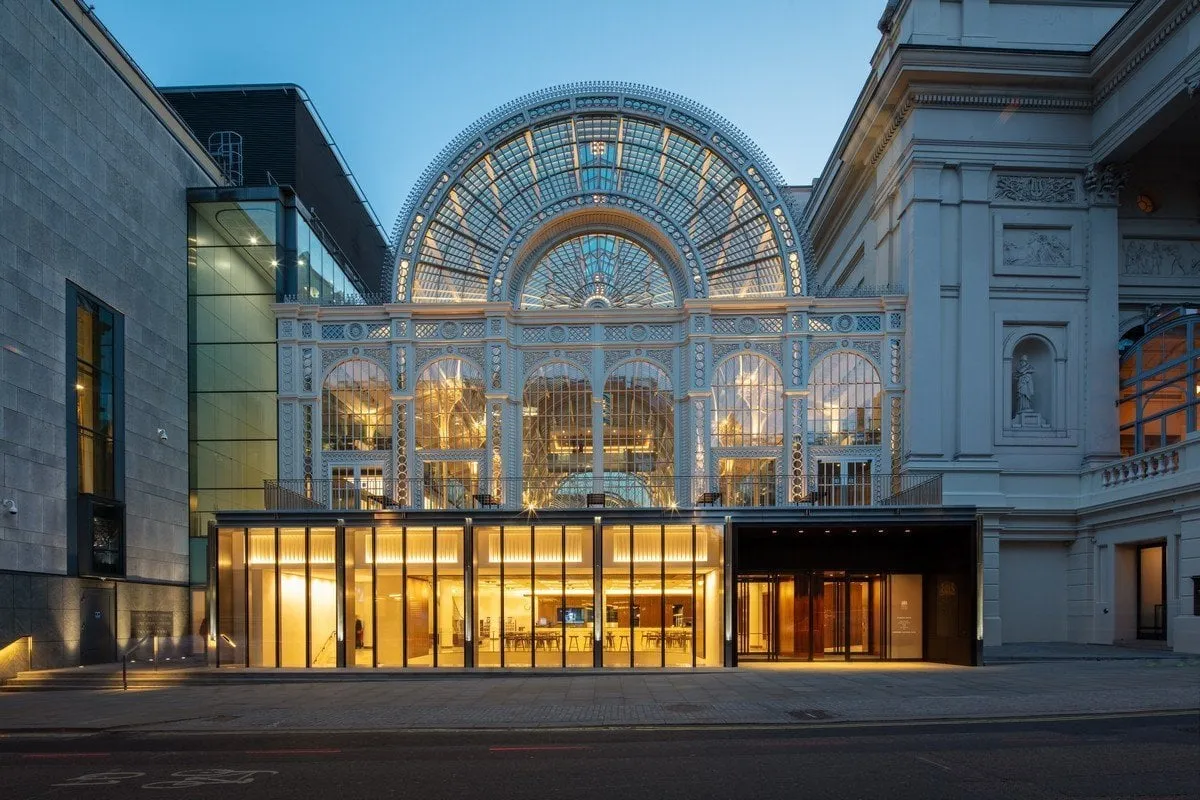 Photo: Royal Opera House, via www.gramilano.com
The Science of Harmonic Fragrance
Dr. Elena Voronova, a synesthete and former violinist who now directs fragrance development at Penhaligon's, brings a unique perspective to this musical approach. Her research into harmonic ratios—the mathematical relationships that create pleasing musical intervals—has yielded breakthrough insights into fragrance blending.
"Consider the perfect fifth in music," Dr. Voronova elucidates. "This interval, with its frequency ratio of 3:2, creates a sense of resolution and stability. We've discovered that certain molecular combinations in fragrance exhibit similar harmonic relationships, creating olfactory 'intervals' that the nose perceives as particularly pleasing."
This scientific rigour extends to timing and development. Where traditional fragrances might transition arbitrarily from one phase to another, harmonically composed scents follow precise temporal structures. The opening movement might last precisely seven minutes—long enough to establish thematic material without overstaying its welcome—before transitioning to the development phase with the same careful attention to pacing that characterises symphonic form.
Independent Voices in Harmonic Perfumery
Beyond the established houses, a new generation of independent perfumers embraces this musical methodology with remarkable sophistication. James Heeley, whose Marylebone studio has become a pilgrimage site for fragrance connoisseurs, creates what he terms "chamber music for the senses"—intimate compositions that reward close attention and repeated experience.
Heeley's approach draws inspiration from the intimate scale of British chamber music tradition. "A string quartet achieves its power through restraint and precision," he observes. "Similarly, a fragrance built on four or five carefully chosen materials, each playing its part with mathematical precision, can achieve far greater emotional impact than a composition employing dozens of components."
His recent collaboration with the London Symphony Orchestra resulted in a limited series of fragrances, each corresponding to a different section of the orchestra. The woodwind-inspired composition layers cedar and rosewood with the green clarity of galbanum, while the brass interpretation employs the metallic facets of iris and the golden warmth of immortelle to create an olfactory equivalent of orchestral brass.
 Photo: London Symphony Orchestra, via lofrev.net
The Silence Between Notes
Perhaps most intriguingly, these musical perfumers understand the crucial role of silence—or in olfactory terms, the spaces between dominant accords where the nose can rest and recalibrate. Traditional fragrances often overwhelm with constant sensory input, but harmonically composed scents incorporate deliberate pauses.
"In music, the rests are as important as the notes," explains composer-turned-perfumer Rebecca Dale, whose background scoring for the BBC Proms has informed her approach to fragrance creation. "A fragrance needs breathing room—moments where certain elements retreat, allowing others to emerge with greater clarity."
This principle manifests in Dale's signature technique of "olfactory counterpoint," where different scent themes weave in and out of prominence throughout the fragrance's development, creating a complex but never chaotic sensory experience.
The Future of Symphonic Scent
As this movement gains momentum, its influence extends beyond artisanal creators to inform the broader fragrance industry. Major houses increasingly employ musical terminology in briefing sessions, speaking of "scent signatures" and "olfactory orchestration" with the same precision once reserved for discussing molecular structures.
The Royal College of Music has announced plans for a cross-disciplinary programme linking composition students with perfumery apprentices, while the London Perfumery School now offers modules in musical theory as part of its advanced curriculum.
For the discerning fragrance enthusiast, this evolution represents an unprecedented opportunity to engage with scent as high art. These harmonically composed fragrances reward the same careful attention and repeated experience that one might devote to a beloved symphony, revealing new facets and subtleties with each encounter.
In an era where fragrance marketing often prioritises immediate impact over lasting sophistication, this musical approach offers something infinitely more rewarding: compositions that grow more beautiful with familiarity, revealing their architectural secrets to those willing to listen with both nose and heart.