Curated Sanctuaries: The Interior Architecture of Britain's Most Sophisticated Beauty Rituals
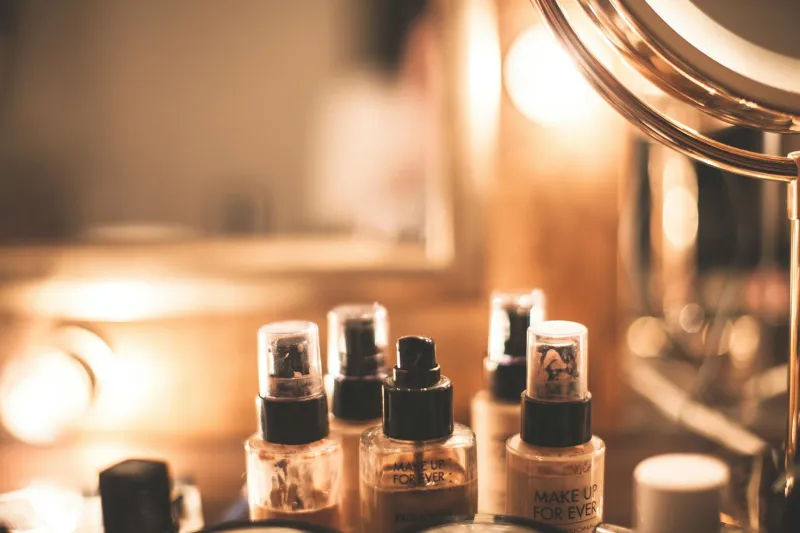
Curated Sanctuaries: The Interior Architecture of Britain's Most Sophisticated Beauty Rituals
In the drawing rooms of Belgravia and the converted lofts of Shoreditch, a quiet revolution is taking place. Britain's most sophisticated women are rejecting the hastily assembled bathroom counter in favour of intentionally designed beauty sanctuaries that transform daily routines into moments of considered luxury.
The Psychology of Sacred Space
The connection between environment and ritual runs deeper than mere aesthetics. Dr Sarah Pemberton, a London-based environmental psychologist, explains that "our surroundings profoundly influence our mindset and behaviour. When we create a dedicated space for self-care, we signal to ourselves that this time is valuable, worthy of attention and intention."
This principle manifests beautifully in the bespoke vanity of Charlotte Mills, a textile designer whose Marylebone flat features a converted Victorian writing desk that serves as her morning sanctuary. "I inherited this piece from my grandmother," she explains, "but I've transformed it entirely. The drawers now house my skincare collection in custom acrylic organisers, and I've added museum-quality lighting that mimics northern daylight."
Architecture of Intention
The most successful beauty spaces share common design principles that prioritise both form and function. Interior stylist Helena Ward, whose Notting Hill studio has consulted on numerous high-end residential projects, identifies three fundamental elements: "Light, storage, and reflection – but not necessarily in the form you might expect."
Ward advocates for layered lighting systems that combine task lighting for precision work with ambient illumination for overall warmth. "I often specify LED strip lighting beneath floating shelves, which creates a gallery-like effect whilst eliminating shadows on the face," she notes. "It's about creating an environment where you can see yourself clearly, both literally and metaphorically."
The Curation Philosophy
Unlike the maximalist beauty rooms popularised by social media, Britain's most discerning practitioners embrace a philosophy of thoughtful curation. Emma Thornfield, beauty director at a prominent London publishing house, has transformed a corner of her Hampstead bedroom into what she terms "a study in restraint."
"I display only my daily essentials," she explains, gesturing to a series of glass apothecary jars containing her morning skincare routine. "Everything else is stored in custom drawers beneath. The visual calm allows me to focus on the ritual itself rather than being overwhelmed by choice."
This approach reflects broader British sensibilities around luxury – the understanding that true sophistication lies not in abundance but in the careful selection of exceptional pieces.
Regional Interpretations
Across Britain, these beauty sanctuaries reflect local architectural heritage whilst serving universal needs. In Edinburgh's New Town, conservator Margaret Stewart has created her morning ritual space within a Georgian alcove, using the natural niche to display her collection of heritage British skincare brands against original stone walls.
"The contrast between the ancient architecture and modern formulations feels entirely appropriate," she observes. "Both represent the finest of their respective eras."
Meanwhile, in a Manchester warehouse conversion, photographer Lisa Chen has constructed a floating vanity that appears to hover within the industrial space. "I wanted something that felt contemporary but not disconnected from the building's history," she explains. "The clean lines complement the raw brick whilst creating a sense of sanctuary within the larger space."
The Ritual of Arrangement
The physical act of organising these spaces becomes part of the beauty ritual itself. Many practitioners describe a weekly or monthly rearrangement process that keeps their space feeling fresh and intentional.
"I treat my vanity like a still life," explains art dealer Victoria Ashworth, whose Chelsea flat features a vanity arranged around seasonal colour palettes. "In autumn, I might display my deeper lipsticks alongside amber glass bottles and perhaps a small branch from the garden. It's about creating harmony between my beauty choices and my environment."
Investment in Infrastructure
The most successful beauty sanctuaries require thoughtful investment in infrastructure. This might mean installing additional electrical points for optimal lighting, commissioning bespoke storage solutions, or even structural modifications to create the perfect niche.
Interior architect James Morrison, whose practice specialises in luxury residential projects, notes an increasing number of clients requesting dedicated beauty spaces. "We're seeing everything from converted box rooms to purpose-built alcoves within master suites," he explains. "The key is understanding that this isn't frivolity – it's about creating space for daily practices that contribute to overall wellbeing."
The Mirror as Centrepiece
Perhaps no element is more crucial than the mirror itself. The most sophisticated practitioners invest in pieces that serve as both functional tool and design statement. Antique Georgian mirrors, contemporary pieces by British craftspeople, and even custom installations create focal points that elevate the entire space.
"A beautiful mirror changes everything," observes interior designer Sophie Ashby, whose own vanity features a 1960s Italian mirror flanked by contemporary British ceramics. "It becomes the lens through which you see yourself each morning – quite literally. That frame matters more than people realise."
Seasonal Evolution
Like any well-designed interior, the most successful beauty sanctuaries evolve with the seasons. This might mean swapping lighter formulations for richer textures as autumn approaches, or introducing new scents that reflect changing moods and occasions.
"My space tells the story of my year," reflects fashion editor Caroline Wright, whose Islington vanity features rotating displays of seasonal beauty discoveries. "It's a visual diary of what I've been drawn to, what I've discovered, what serves me in different seasons of life."
The Future of Beauty Spaces
As working from home becomes increasingly common, these dedicated beauty spaces serve an even more crucial role in creating structure and intention within domestic life. They represent a commitment to self-care that transcends mere vanity, acknowledging that the ritual of preparation – whether for a video call or an evening out – deserves space, time, and attention.
In an era of constant connectivity and blurred boundaries between public and private life, these carefully curated sanctuaries offer something increasingly precious: a moment of pause, a space for reflection, and the daily opportunity to present one's best self to the world with intention and care.