Clay Vessels and Beauty Vessels: Britain's Ceramic Renaissance Transforms Luxury Packaging
The Weight of Quality
In an age of ephemeral beauty trends and disposable packaging, Britain's most discerning consumers are gravitating towards something altogether more substantial. The revival of studio ceramics—a movement that has quietly flourished from the industrial heartlands of Staffordshire to the coastal workshops of Cornwall—is now intersecting with luxury beauty in the most unexpected and sophisticated manner.
The phenomenon extends far beyond mere aesthetic appeal. When Emma Bridgewater collaborates with Cowshed to create limited-edition ceramic vessels for their botanical bath oils, or when Neal's Yard Remedies commissions hand-thrown pots from Yorkshire ceramicist Sarah Scampton, these partnerships represent a fundamental shift in how we perceive and interact with beauty packaging.
The Stoke-on-Trent Connection
The Potteries, that historic constellation of towns in North Staffordshire, provides the cultural bedrock for this movement. Here, where industrial ceramics once supplied the empire, contemporary artisans are reimagining the relationship between vessel and contents. Burleigh Pottery, established in 1851, has recently partnered with British skincare house Temple Spa to create distinctive ceramic containers that customers retain long after the last drop of serum has been applied.
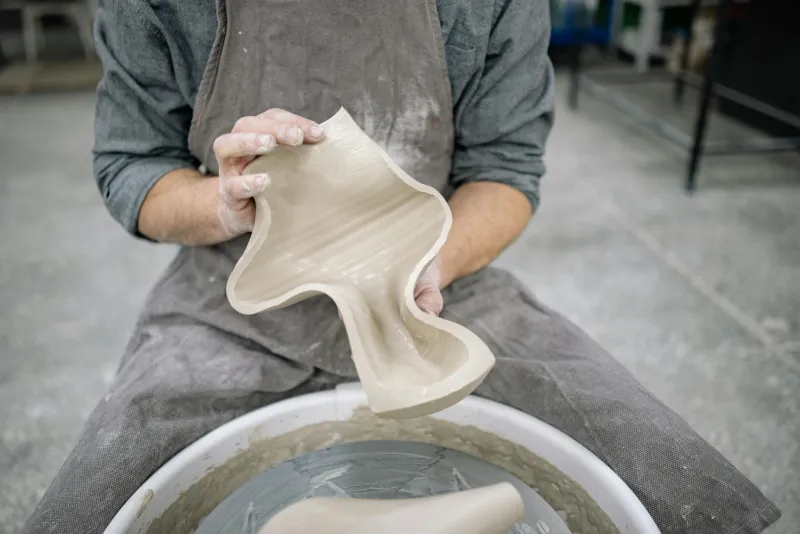
The psychological impact of this shift cannot be understated. Where plastic compacts and glass bottles suggest transience, ceramic vessels imply permanence, investment, and considered consumption. The slight irregularities inherent in hand-thrown pottery—the gentle asymmetry, the variation in glaze thickness, the tactile reminder of human craftsmanship—create an entirely different relationship between consumer and product.
Contemporary Collaborations
London-based ceramicist Frances Priest has become something of a sensation among beauty insiders for her collaborations with independent British brands. Her hand-built vessels for cult favourite Votary's facial oils transform the daily skincare ritual into something approaching ceremony. Each pot bears the subtle marks of the maker's hands, elevating the mundane act of moisturising into a moment of mindful luxury.
Similarly, Scottish ceramicist Nicola Tassie's partnership with Edinburgh-based aromatherapy house Arran Aromatics has produced a collection of vessels that celebrate both the imperfection of handcraft and the precision of formulation. These containers, with their distinctive volcanic glazes inspired by the Scottish landscape, become part of the bathroom's permanent architecture rather than temporary residents.
The Sustainability Narrative
Beyond aesthetics lies a more pressing contemporary concern: environmental responsibility. Ceramic packaging represents a compelling alternative to the beauty industry's reliance on single-use plastics and energy-intensive glass production. The durability of well-made pottery ensures these vessels will outlive their original contents by decades, potentially centuries.
This longevity appeals particularly to the British consumer's innate appreciation for quality and permanence. Where Continental Europeans might embrace the novelty of seasonal packaging refreshes, the British preference has always leaned towards investment pieces that improve with age and use.
The Mass Market Influence
Perhaps most intriguingly, this ceramic renaissance is beginning to influence even mass-market beauty presentation. Boots has experimented with ceramic-effect packaging for their premium No7 ranges, while Superdrug's own-brand ceramics-inspired containers attempt to capture some of the artisanal appeal without the accompanying price point.
The challenge for these larger retailers lies in replicating the essential quality that makes authentic ceramic packaging so compelling: the sense of individual craftsmanship and the subtle variations that mark each piece as unique.
The Collector's Perspective
For Britain's beauty collectors—those discerning individuals who view their vanity tables as curated galleries—ceramic packaging represents the ultimate fusion of function and collectibility. These vessels don't merely contain products; they become part of the room's permanent aesthetic, worthy of display long after their original contents have been consumed.
The investment potential is not insignificant. Limited-edition ceramic pieces from established collaborations between beauty brands and recognised ceramicists are already commanding premium prices on the secondary market, suggesting that the most successful partnerships are creating genuine collector's items.
Looking Forward
As this movement matures, we can expect to see increasingly sophisticated partnerships between British ceramicists and beauty brands. The key lies in authenticity—collaborations that respect both the potter's craft and the formulator's expertise, creating vessels that enhance rather than overshadow their contents.
The ceramic revolution in beauty packaging represents more than a trend; it signals a fundamental shift towards considered consumption, sustainable luxury, and the enduring British appreciation for craftsmanship that improves with time.