The Botanical Briefing: How RHS Chelsea's Champion Blooms Become Next Year's Signature Scents
The Secret Season of Scent Scouting
Whilst the general public admires the architectural precision of show gardens and the horticultural mastery on display, a select group of industry professionals moves through the Chelsea grounds with altogether different intentions. These are Britain's leading perfumers, brand directors, and fragrance consultants, attending not for leisure but for intelligence gathering of the most sophisticated kind.
 Photo: RHS Chelsea, via images.squarespace-cdn.com
"Chelsea operates as our unofficial crystal ball," reveals Sarah Cartwright, creative director at Penhaligon's, who has attended the show professionally for over a decade. "The plants that capture judges' attention, the varieties that stop visitors in their tracks—these become the building blocks of our fragrance briefs eighteen months later."
This phenomenon extends far beyond casual inspiration. The systematic approach taken by Britain's fragrance elite transforms what appears to be a leisurely garden party into a strategic forecasting exercise that influences everything from niche perfumery to mass-market launches.
From Gold Medal to Golden Formula
The correlation between Chelsea's award winners and subsequent fragrance launches reveals itself in fascinating patterns. The 2019 triumph of Paeonia 'Sarah Bernhardt' at Chelsea preceded a notable surge in peony-centred fragrances appearing across British perfumery houses throughout 2020 and 2021. Similarly, the increased prominence of heritage apple varieties in recent Chelsea displays has coincided with a renaissance of orchard-inspired compositions in contemporary British perfumery.
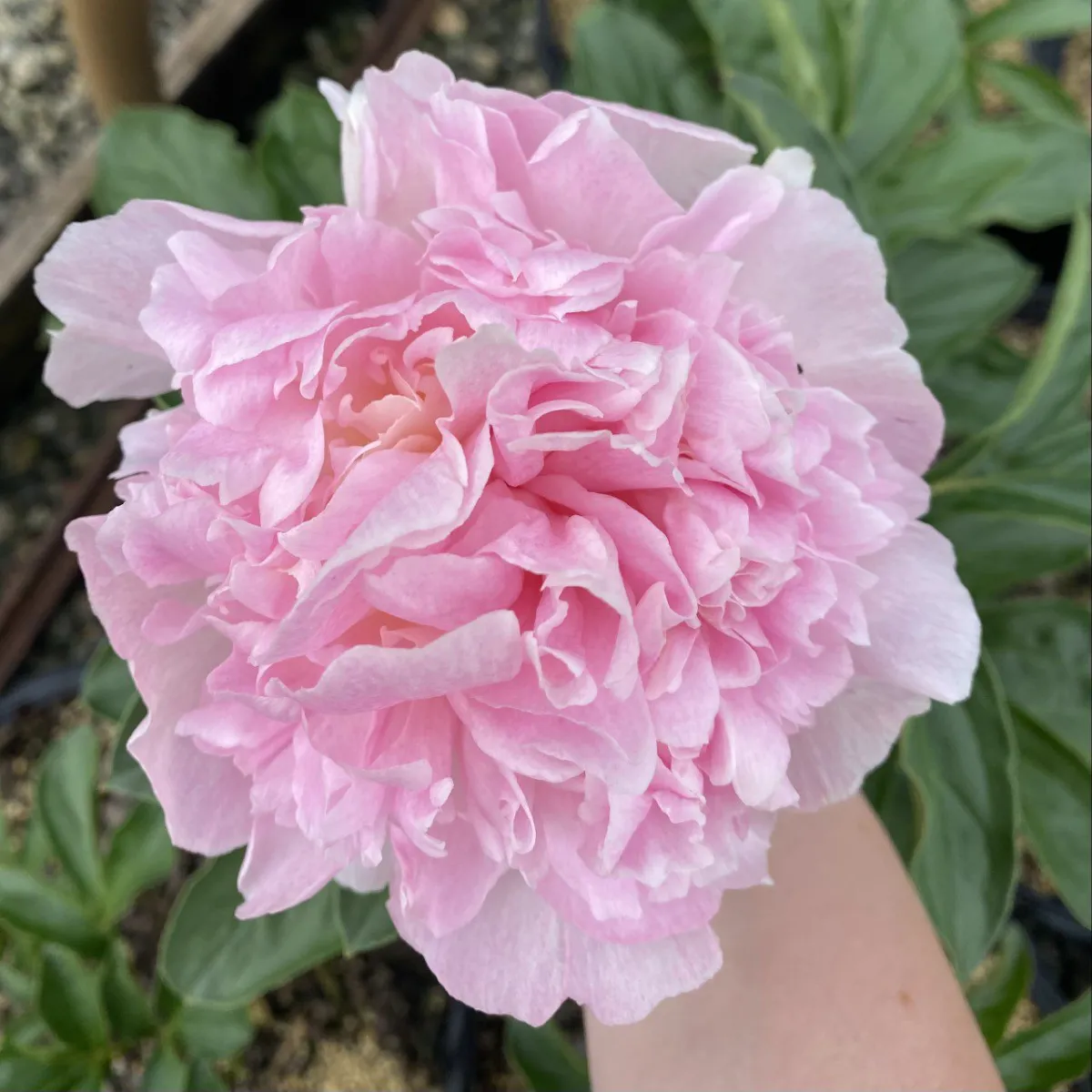 Photo: Paeonia 'Sarah Bernhardt', via b3282352.smushcdn.com
James Heeley, founder of Heeley Parfums, describes his Chelsea methodology with scientific precision: "I photograph specific specimens, note their precise stage of bloom, and crucially, observe public reaction. The varieties that create genuine emotional response become candidates for olfactory interpretation."
This approach extends beyond individual flowers to encompass entire garden concepts. The trend towards naturalistic planting schemes at Chelsea has directly influenced the movement towards 'wild' fragrance compositions—scents that capture the complexity of natural ecosystems rather than isolated floral notes.
The Intelligence Network
Britain's fragrance houses have developed sophisticated systems for translating Chelsea's horticultural insights into commercial success. Many employ dedicated botanical consultants who attend the show specifically to identify emerging trends in plant breeding, colour palettes, and garden design philosophy.
"We're not just looking at what's winning awards," explains Rebecca Morrison, head of product development at Jo Malone London. "We're observing which gardens create queues, which displays generate the most photography, which scents have visitors lingering. Human behaviour at Chelsea is incredibly predictive of fragrance preferences."
This intelligence gathering extends to monitoring social media engagement, tracking which Chelsea exhibits generate the most online discussion, and noting the specific botanical details that resonate most strongly with younger demographics—crucial data for brands targeting the next generation of fragrance consumers.
The Seasonal Translation
The eighteen-month gap between Chelsea's May showcase and subsequent fragrance launches allows for sophisticated interpretation of horticultural trends into olfactory experiences. British perfumers have become particularly adept at capturing not just the scent of specific flowers, but the entire sensory experience of award-winning gardens.
Ruth Mastenbroek, whose eponymous fragrance house has built its reputation on botanical accuracy, explains her process: "A Chelsea garden is never about a single flower—it's about the interplay of foliage, soil, air temperature, even the sound of gravel underfoot. Our fragrances attempt to capture these complete environments."
This holistic approach has produced some of Britain's most sophisticated contemporary fragrances, compositions that transcend traditional floral categories to create entirely new olfactory experiences inspired by specific Chelsea moments.
The Cultural Forecast
Chelsea's influence on British fragrance extends beyond individual scents to shape broader cultural attitudes towards botanical luxury. The show's emphasis on sustainability, native species, and environmental responsibility has directly influenced the fragrance industry's approach to ingredient sourcing and brand messaging.
"Chelsea sets the cultural tone for how Britain thinks about plants, gardens, and natural beauty," observes perfume historian Dr. Catherine Haslam. "Fragrance houses that ignore these cultural shifts do so at their peril."
The result is a uniquely British approach to fragrance development, one that treats scent not as abstract artistry but as cultural documentation—capturing and preserving the specific botanical moments that define each season's aesthetic consciousness.
The Future of Floral Intelligence
As climate change and environmental awareness reshape both horticulture and perfumery, Chelsea's role as an industry forecasting tool becomes increasingly sophisticated. Fragrance houses are now tracking not just which plants win awards, but which varieties demonstrate climate resilience, which species support biodiversity, and which growing methods align with sustainable luxury values.
This evolution suggests that Chelsea's influence on British fragrance will only deepen, creating an increasingly sophisticated dialogue between horticultural innovation and olfactory artistry—a conversation that continues to define Britain's unique position in global fragrance culture.