Aquatic Alchemy: The Revival of Bath-Based Beauty Rituals in Contemporary British Culture
The Renaissance of Ritual Bathing
In an era where efficiency often supersedes indulgence, a quiet revolution is occurring within the sanctuaries of Britain's most discerning homes. The bath, once relegated to childhood memories and Sunday evening routines, has emerged as the cornerstone of sophisticated beauty practice—a transformation that speaks to our collective yearning for meaningful ritual in an increasingly fragmented world.
This resurgence extends far beyond mere relaxation. Today's bath enthusiasts approach their evening soak with the precision of a laboratory scientist and the reverence of a spa therapist, understanding that prolonged immersion in carefully curated water can deliver transformative results that rival professional treatments.
The Science of Submersion
The physiological benefits of extended bathing have long been understood in therapeutic circles, yet their application to beauty routines represents a sophisticated evolution in skincare thinking. When the body is submerged in warm water for extended periods, several mechanisms activate simultaneously: increased circulation promotes cellular renewal, elevated temperature opens pores for deeper cleansing, and hydrostatic pressure provides gentle lymphatic drainage.
This understanding has led to the development of increasingly sophisticated bath formulations. Modern practitioners select mineral-rich salts from the Dead Sea or Himalayan peaks, botanical oils extracted through cold-pressing techniques, and targeted active ingredients that penetrate more effectively in the warm, humid environment of the bath.
Britain's Thermal Heritage
The contemporary bath revival draws considerable inspiration from Britain's illustrious spa heritage. The Georgian elegance of Bath, with its Roman foundations and neoclassical refinement, established a template for therapeutic bathing that resonates centuries later. Similarly, Harrogate's Victorian splendour demonstrated how mineral-rich waters could become the foundation of sophisticated wellness culture.
These historic precedents inform today's approach, where practitioners understand that the quality of water itself forms the foundation of effective treatment. Many devotees invest in water filtration systems or source specific mineral waters, recognising that chlorinated tap water can compromise the delicate balance of carefully selected bath ingredients.
Curating the Perfect Sequence
The art of bath curation extends beyond ingredient selection to encompass timing, temperature, and sequence. The most sophisticated practitioners begin their ritual with dry brushing, stimulating circulation and preparing the skin for enhanced absorption. Water temperature is maintained between 37-40°C—warm enough to promote circulation and pore opening, yet not so hot as to cause dehydration or irritation.
The duration of immersion typically ranges from twenty to forty minutes, allowing sufficient time for active ingredients to penetrate whilst preventing the skin from becoming overly saturated. Post-bath care proves equally crucial: immediate application of body oils or balms to damp skin locks in moisture and extends the benefits of the treatment.
The British Apothecary Renaissance
This renewed interest in bath-based beauty has coincided with a remarkable renaissance in British apothecary brands. Companies such as Aromatherapy Associates, with their carefully balanced essential oil blends, and Susanne Kaufmann, though Austrian, widely available through British retailers, have elevated bath products from commodity items to precision-crafted treatments.
Domestic brands like Haeckels, drawing inspiration from the Margate coastline, create bath salts infused with British seaweeds and marine minerals. Meanwhile, established names such as Penhaligon's have expanded beyond fragrance to offer bath oils that transform the evening soak into an olfactory journey through English gardens and countryside.
The Modern Bath Sanctuary
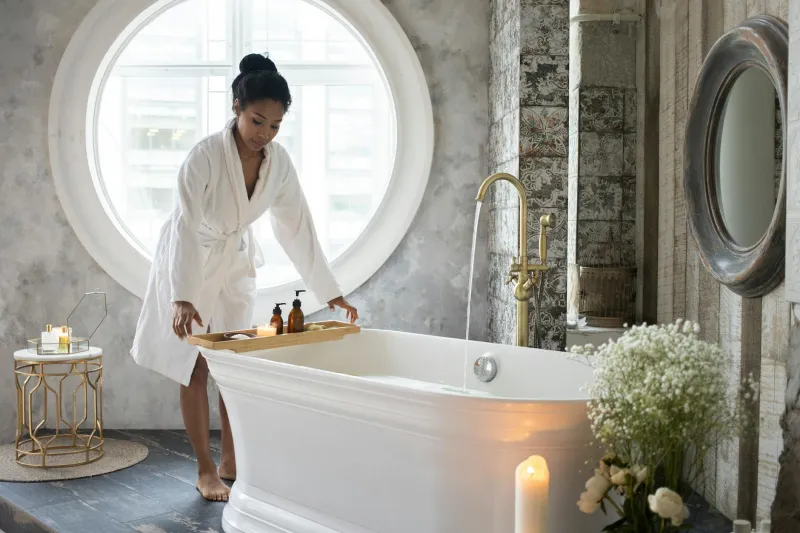
The physical environment of the contemporary bath ritual reflects this elevated approach. Practitioners invest in quality fixtures—deep, ergonomically designed tubs that maintain temperature effectively and provide comfortable positioning for extended soaking. Lighting becomes crucial, with many favouring candles or dimmed fixtures that promote the relaxation response necessary for optimal treatment benefits.
Storage solutions for bath products have evolved into displays worthy of museum exhibition, with glass vessels containing various salts, oils, and botanical preparations arranged with curatorial precision. This visual element reinforces the ceremonial nature of the practice, distinguishing it from mere functional bathing.
Seasonal Adaptations
Sophisticated bath practitioners adjust their approach seasonally, understanding that skin requirements shift with environmental conditions. Winter baths might incorporate warming essential oils like ginger or black pepper, alongside deeply nourishing ingredients such as oat milk or honey. Summer formulations favour cooling elements like eucalyptus or peppermint, with lighter oils that won't overwhelm heat-stressed skin.
This seasonal awareness extends to timing as well. Winter baths often occur earlier in the evening, allowing the warming effects to prepare the body for sleep. Summer soaks might be scheduled later, providing cooling relief from the day's heat whilst preparing the skin for overnight repair processes.
The Future of Bathing Culture
As this movement continues to evolve, we observe increasing sophistication in both product development and practice. Brands are beginning to offer pH-balanced formulations that work synergistically with skin chemistry, whilst practitioners develop increasingly personalised approaches based on individual skin requirements and lifestyle factors.
The revival of bath-based beauty represents more than a trend—it embodies a fundamental shift towards mindful self-care that prioritises quality over quantity, ritual over routine. In reclaiming the bath as a sophisticated beauty treatment, Britain's most discerning women are not merely following fashion but establishing a new paradigm for how we approach personal care in the modern era.
This transformation from functional necessity to curated ritual reflects a broader cultural movement towards intentional living, where every aspect of daily routine becomes an opportunity for enhancement and elevation. The bath, in this context, emerges not as indulgence but as investment—in skin health, mental wellbeing, and the preservation of meaningful ritual in our increasingly digital world.